Manual Phoropter vs Automated Phoropter: Which Is Better for Your Eye Care Practice?
Quick Comparison Table
Manual Phoropter vs Automated Phoropter: A Practical Comparison for Eye Care Practices
Choosing between a manual phoropter and an automated phoropter is not just about buying new equipment. It affects patient experience, examination speed, clinical workflow, training requirements, maintenance costs, and long-term practice growth.
Both systems are still widely used. Manual phoropters remain popular in smaller clinics, training environments, and budget-sensitive markets. Automated or digital phoropters are increasingly adopted in high-volume practices, hospital eye departments, and modern optometry clinics that want faster, more connected examinations.
This comparison helps eye care professionals, clinic owners, distributors, and procurement teams understand the real differences.
What Is a Manual Phoropter?
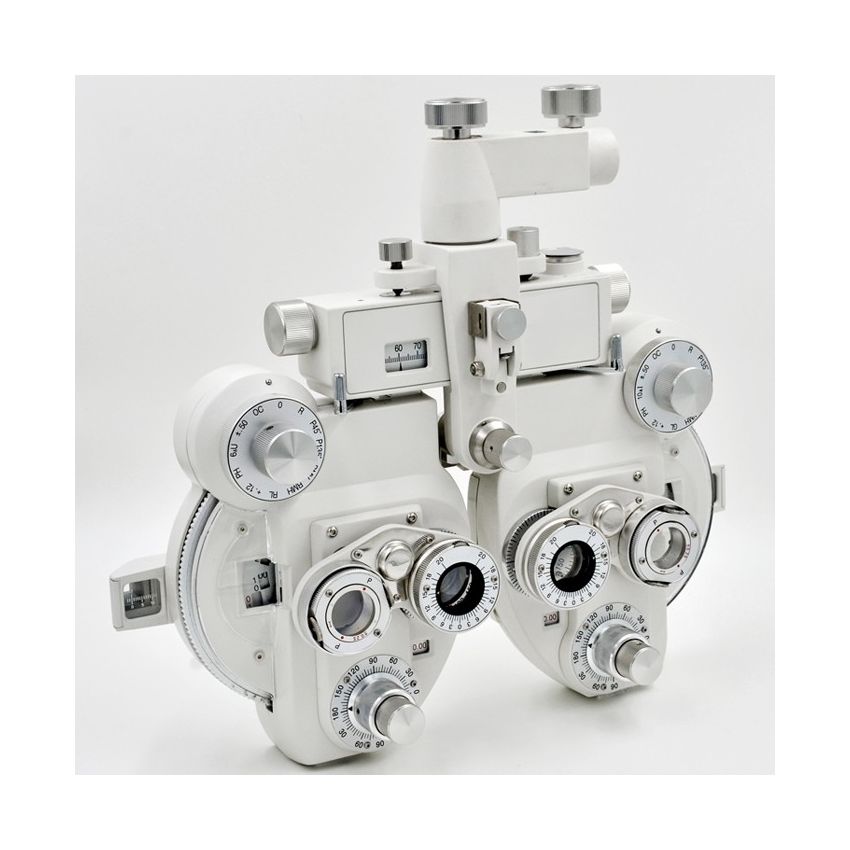
A manual phoropter is a mechanical refraction device. The examiner rotates dials and levers to change sphere, cylinder, axis, prism, and auxiliary lenses. The patient gives subjective feedback, usually through questions such as “Which is clearer, one or two?”
Manual phoropters are valued for their simplicity, durability, and direct tactile control. They require no complex software, no network connection, and minimal technical support.
What Is an Automated Phoropter?
An automated phoropter, also called a digital phoropter or auto phoropter, uses motorized lenses, digital controls, and software-driven test sequences. Lens changes happen electronically, and many systems can import pre-test data from autorefractors, keratometers, or lensmeters.
Advanced models support guided refraction, binocular testing, EMR/EHR integration, remote operation, and faster patient throughput.
Quick Comparison Table
Patient Experience and Comfort
Manual phoropters can feel familiar, but some patients find the examination long. The process depends heavily on the examiner’s rhythm and questioning style.
Automated phoropters often feel smoother. Lens changes are quieter and faster, and many systems display results on a screen. Some platforms also allow side-by-side prescription comparisons, which can improve patient understanding and optical sales conversion.
For anxious patients, children, or first-time wearers, a faster and more interactive exam can reduce uncertainty.
Examination Speed and Workflow Efficiency
Speed is one of the biggest advantages of automated phoropters. Manual lens rotation, prism insertion, and cross-cylinder adjustments take more time, especially during busy clinic hours.
Digital systems can automate lens switching, store starting values from pre-test instruments, and run guided refraction protocols. Some providers report being able to see more patients per day after upgrading to digital refraction workflows.
However, speed should not replace clinical judgment. A good automated system still requires professional verification, especially for complex prescriptions.
Convenience for Clinicians
Manual phoropters give examiners full tactile control. Many experienced optometrists appreciate the direct tactile feedback when refining cylinder axis, balancing binocular vision, or adjusting prism.
Automated phoropters reduce repetitive hand movements. Examiners can operate the device with a remote controller, touchscreen, or foot switch. This can reduce physical strain on the neck, shoulders, and hands during long working days.
For clinics with multiple technicians, automated systems also make it easier to standardize examination steps.
Maintenance and Reliability
Manual phoropters are mechanically robust. They have fewer electronic components, so they are less likely to suffer from software errors, network issues, or power failures. Routine maintenance usually involves cleaning, lubrication checks, and occasional mechanical adjustment.
Automated phoropters require more technical care. Clinics should consider:
- Software updates
- Motor and sensor reliability
- Calibration schedules
- Controller or tablet compatibility
- Spare parts availability
- After-sales support response time
For overseas buyers, after-sales service quality and spare parts supply are especially important.
Cost and Return on Investment
Manual phoropters generally have a lower purchase price. They are suitable for:
- Start-up clinics
- Rural or community eye care centers
- Training institutions
- Practices with moderate patient volume
- Markets with tighter equipment budgets
Automated phoropters require a higher initial investment. However, they may improve return on investment through faster examinations, reduced transcription errors, better patient experience, and easier integration with practice management systems.
When evaluating cost, buyers should look beyond the device price. Total cost of ownership should include installation, training, maintenance, software upgrades, and expected patient volume.
Hygiene and Infection Control
Both systems require regular cleaning. Manual phoropters have fewer electronic surfaces, which can make disinfection straightforward. However, dials, levers, and forehead rests still need routine sanitation.
Automated phoropters often include displays, remote controllers, and touch panels. Clinics should choose models with smooth, wipeable surfaces and confirm that cleaning agents recommended by the manufacturer will not damage screens or housings.
Forehead rests, occluders, and chin supports should be cleaned between patients regardless of equipment type.
Installation and Space Requirements
A manual phoropter usually needs a standard phoropter stand, a chair, and a vision chart. Installation is simple, and power supply requirements are minimal.
Automated phoropters may need:
- Stable power supply
- Connection to a computer or controller
- Compatibility with EMR/EHR systems
- Proper cable management
- Adequate space for screens or remote devices
The physical footprint of the refractor head is often similar, but digital systems may require additional workspace for controllers, tablets, or integrated displays.
For small clinics, compact designs and wireless controllers can help save space.
Visual Function Testing
Visual function testing includes binocular vision assessment, phoria measurement, fusional vergence, accommodation, stereopsis, and prism-related evaluations.
Manual phoropters have long been used for these tests. Built-in prisms, Maddox rods, cross cylinders, and auxiliary lenses allow experienced examiners to perform detailed binocular assessments.
Automated phoropters can also support visual function testing, especially when they include:
- Motorized prism control
- Binocular test programs
- Near and distance phoria measurement
- Accommodation and vergence testing
- Integration with digital chart systems
Research on digital binocular vision platforms shows promising agreement with conventional tests, although results may vary by device and test type. For clinical use, practitioners should verify that the system supports the specific visual function protocols they need.
Routine Refraction and Final Prescription Refinement
For routine subjective refraction, both systems can deliver accurate results when used correctly.
Manual phoropters allow fine, continuous adjustment. Experienced examiners can quickly respond to subtle patient feedback, which is helpful for:
- Astigmatism axis refinement
- Low-prescription fine tuning
- Complex binocular balance
- Patients with irregular visual complaints
Automated phoropters improve repeatability. They reduce manual entry errors and help maintain consistent test sequences across different operators. Some systems also support guided refraction, making it easier for junior staff or technicians to perform standardized examinations under professional supervision.
In practice, many clinics use automated refraction for efficiency and then perform manual fine tuning when needed.
Which One Should You Choose?
Choose a manual phoropter if:
- You have a limited equipment budget
- Your clinic prefers simple, durable devices
- You value full manual control during refraction
- You operate in a location with limited technical support
- Your patient volume is moderate
Choose an automated phoropter if:
- You want faster patient throughput
- Your clinic handles high daily patient volume
- You need EMR/EHR or device integration
- You want standardized workflows for multiple staff
- You plan to offer a more modern patient experience
- You are building a digital eye care clinic
Buying Considerations for Clinics and Distributors
Before purchasing, evaluate:
- Clinical needs – Routine refraction, pediatric exams, binocular vision testing, or premium patient experience.
- Patient volume – Higher volume usually benefits more from automation.
- Staff skill level – Automated systems can reduce training time for standardized tests.
- Integration – Check compatibility with autorefractors, lensmeters, chart systems, and EMR software.
- After-sales support – Confirm warranty, calibration, spare parts, and remote troubleshooting.
- Regulatory requirements – Ensure the device meets local medical device regulations for your target market.
- Total cost of ownership – Include installation, training, maintenance, and future upgrades.
Final Note
Neither system is universally “better.” A manual phoropter remains reliable, cost-effective, and clinically powerful in skilled hands. An automated phoropter offers speed, consistency, digital connectivity, and a more modern patient experience.
The right choice depends on your practice size, patient flow, clinical services, budget, and long-term digital strategy. For many growing eye care practices, the most efficient workflow combines automated efficiency with professional subjective refinement.
Related News