Low Vision: Causes, Prevention, and Living with Low Vision
Learn about low vision causes, prevention, rehabilitation training, low vision correction tools, and future vision restoration technologies.
Living with Low Vision: A Comprehensive Guide to Seeing the World Clearly
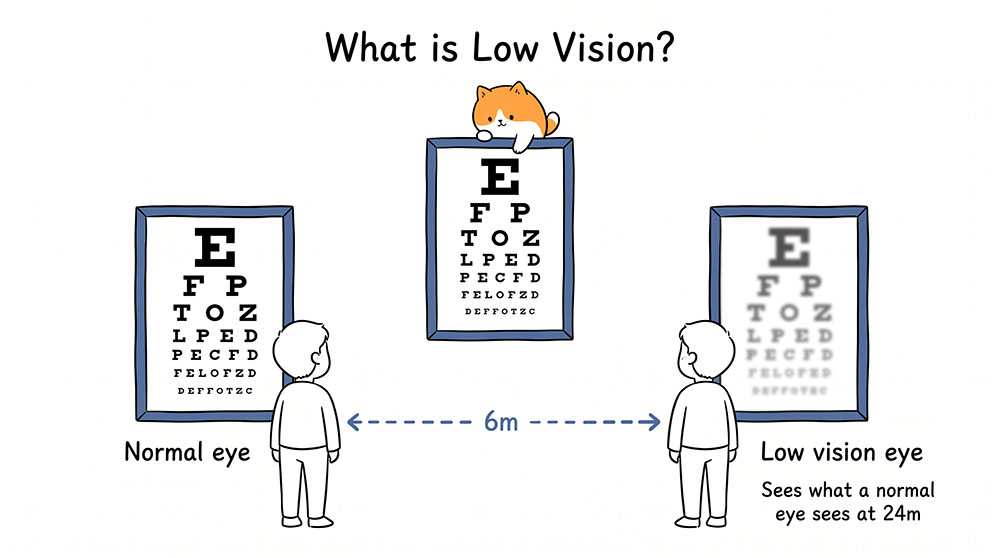
Low vision is a visual impairment that cannot be fully corrected with standard glasses, contact lenses, medication, or surgery. It affects millions of people worldwide and can make everyday activities like reading, recognizing faces, and navigating safely a significant challenge. This guide explores what low vision is, its causes, prevention, rehabilitation strategies, and the promising future technologies that offer hope.
Understanding Low Vision: Definition and Impact
What Qualifies as Low Vision
Low vision is not simply "poor eyesight." It's a condition where your vision cannot be improved to a functional level for daily tasks, even with standard corrective lenses. According to health guidelines, you may be considered to have low vision if your visual acuity is 6/24 or less in your best eye with correction—meaning you must be at 6 meters to see what someone with normal vision can see at 24 meters. Alternatively, a visual field of 20 degrees or less (compared to a normal 180 degrees) also qualifies as low vision.
The World Health Organization (WHO) further defines low vision as corrected visual acuity in the better eye between 0.05 and 0.3. Low vision can take several forms, including:
-
Central vision loss: Inability to see things in the center of your visual field
-
Peripheral vision loss: Inability to see things out of the corners of your eyes
The Emotional Journey of Vision Loss
The psychological impact of low vision is profound. Father Thomas J. Carroll identified 20 types of loss experienced by people with visual impairment, including loss of physical integrity, personal independence, self-esteem, and even the visual perception of beauty. The emotional response often mirrors the five stages of grief: denial, anger, bargaining, depression, and acceptance. Understanding this journey is crucial for both individuals and caregivers, as simplistic encouragement is rarely the solution; instead, proper low vision care and rehabilitation can help the individual settle into the acceptance stage more rapidly.
Causes of Low Vision: Understanding the Root
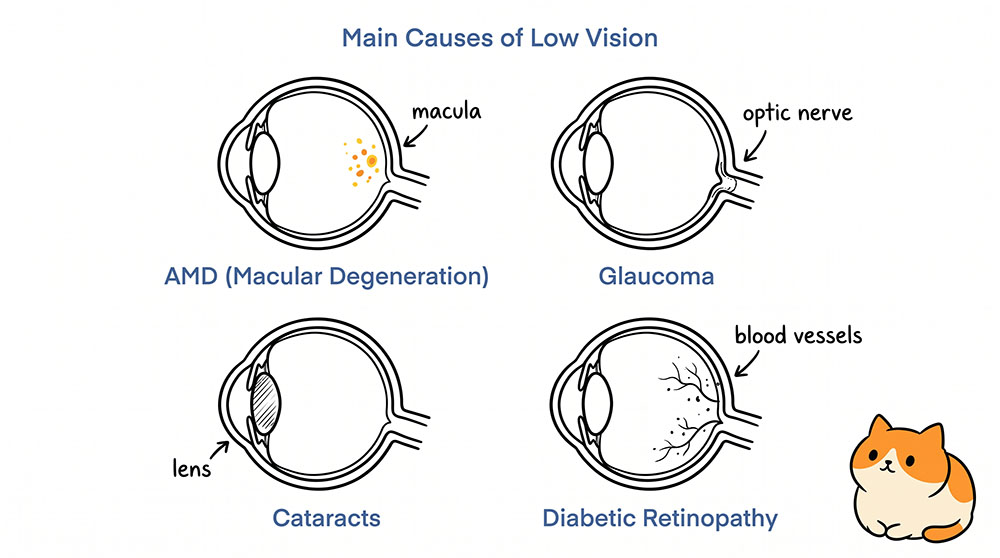
Low vision can result from various conditions that affect the eye or the visual processing centers of the brain. The leading causes include:
Age-Related Eye Diseases
Age is the biggest risk factor for low vision, making it most common in people over 65. The primary age-related conditions include:
-
Age-related macular degeneration (AMD): Affects central vision, making reading and recognizing faces difficult
-
Glaucoma: Damages the optic nerve and leads to peripheral vision loss
-
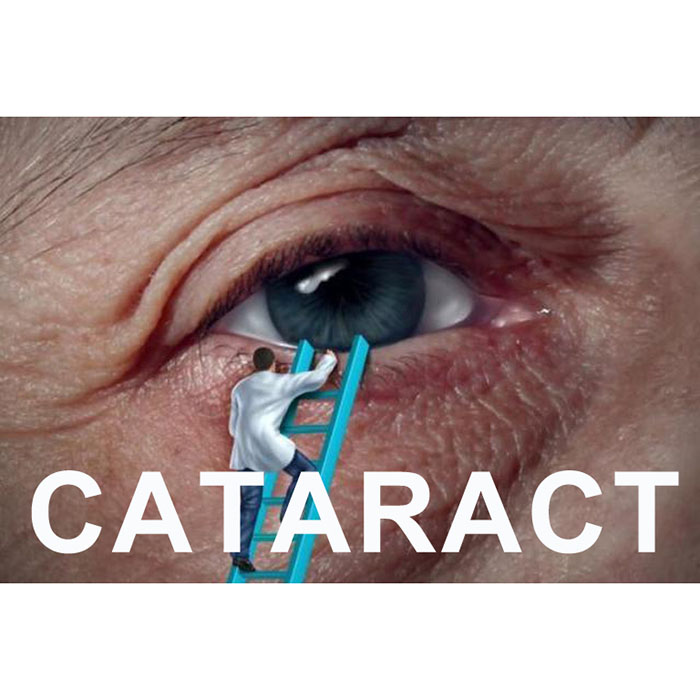
Cataracts: Causes clouding of the eye's lens, resulting in blurry or hazy vision
-
Diabetic retinopathy: Damages blood vessels in the retina due to diabetes
Other Causes
-
Genetic conditions: Such as retinitis pigmentosa and albinism
-
Eye injuries or brain injuries: Trauma to the eye or brain regions involved in sight
-
Amblyopia (lazy eye): Often resulting from neglected strabismus in childhood
Statistics and Projections
Currently, more than 4 million adults over 40 in the U.S. are visually impaired or legally blind. This number is projected to grow to 8 million by 2050. Globally, approximately 200 million people live with degenerative retinal conditions that can lead to low vision.
Prevention: Protecting Your Vision
While not all causes of low vision are preventable, many can be delayed or mitigated through proactive measures.
Regular Eye Examinations
Regular dilated eye exams are crucial for early detection and treatment of serious eye conditions. Have an eye examination every two years after age 40, or more frequently if recommended by your optometrist or ophthalmologist. After age 65, more frequent exams may be needed to diagnose sight-threatening conditions like glaucoma and AMD as early as possible.
Lifestyle Modifications
-
Quit smoking: Smoking is a risk factor for many eye conditions; quitting can help preserve your sight
-
Manage diabetes: Maintain good blood sugar control to delay or prevent vision loss from diabetic eye disease
-
Protect from UV light: Wear Sunglasses to shield your eyes from harmful ultraviolet radiation
-
Eat a vision-healthy diet: Consume dark, leafy green vegetables, colorful fruits, and omega-3 fatty acids found in fish, nuts, and seeds to help preserve vision
Living with Low Vision: Rehabilitation and Training
If you have been diagnosed with low vision, your vision cannot be fully restored, but you can learn to maximize your remaining eyesight. The goal of low vision rehabilitation is to enhance functional vision and maintain independence.
Training Methods for Visual Enhancement
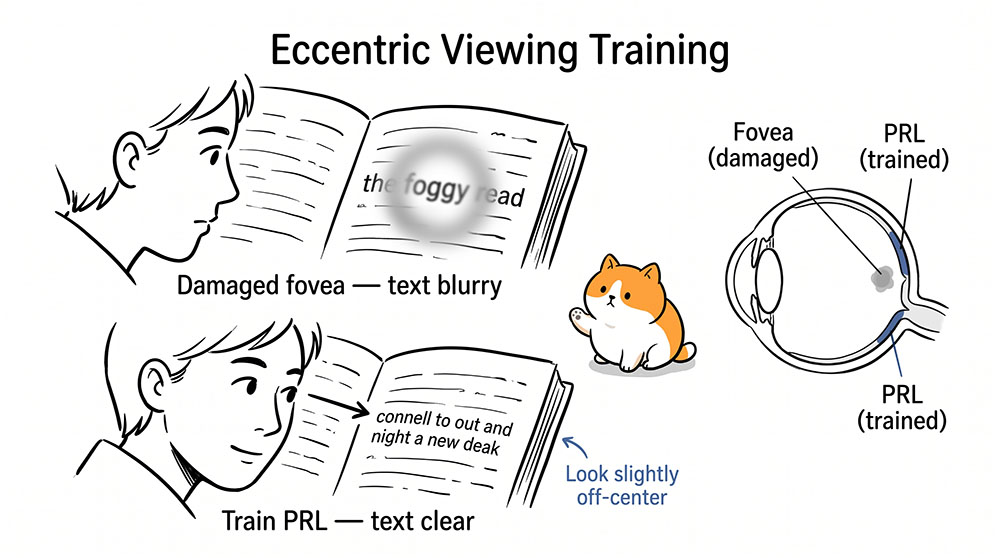
Eccentric Viewing Training
For individuals with central vision loss (such as from macular degeneration), eccentric viewing training is a proven technique. This method involves using a non-foveal preferred retinal locus (PRL) for viewing—essentially training the brain to use a healthy part of the retina for central vision tasks. Research shows that while eccentric viewing training does not improve visual acuity, it significantly increases reading speed and patient satisfaction. The direction of eccentric viewing can be effectively detected using inexpensive methods, making this a practical rehabilitation tool.
Vision Restoration Exercises
Eye-tracking, fixation, and scanning exercises can improve visual input stability and reduce hallucinatory triggers associated with vision loss. These exercises help improve search and scan techniques and minimize the number of fixations used during reading. Techniques have been developed to enhance these skills, though they require specialist teaching and can be time-consuming.
Environmental and Lifestyle Adjustments
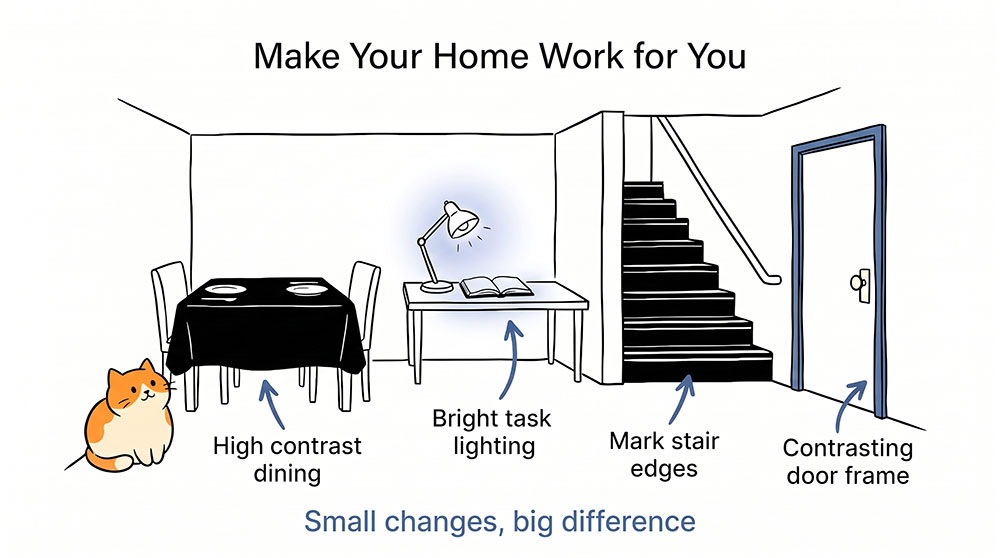
Simple changes to your environment can significantly improve daily function and safety:
Contrast Enhancement:
-
Use a dark tablecloth with white plates for better contrast when dining
-
Paint white lines on the edges of steps and ramps
-
Use brightly colored accessories (cushions, vases) to make furniture easier to locate
-
Paint door frames, door knobs, and handrails in contrasting colors
Lighting Improvements:
-
Install bright lighting in areas where details matter (bathroom, workshop, kitchen)
-
Ensure hallways and stairwells are well-lit for safe navigation
-
Use desk lamps or motion-sensor lights in pantries or darker corners
-
Aim the light at your work, not your eyes
Labeling and Organization:
-
Use high-contrast markers on household items
-
Write with dark, felt-tipped pens for better visibility
-
Increase font sizes on digital devices
Low Vision Correction Tools: Devices for Independence
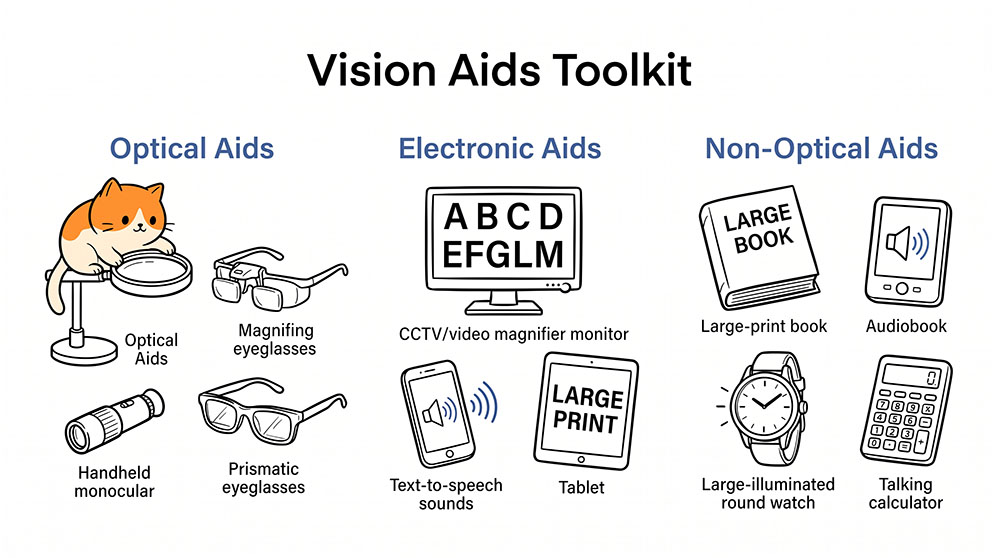
Low Vision Aids fall into three main categories: optical devices, non-optical tools, and electronic/digital aids. A low vision specialist can recommend the best devices for your specific tasks and needs.
Optical Aids
Optical devices use lenses to maximize remaining vision:
-
Magnifying Devices: Include magnifying eyeglasses, hand magnifiers, and magnifying lamps. These help with reading and close-up tasks
-
Telescopic Viewing Devices: Similar to binoculars, these magnify distant objects and can be mounted on regular glasses (bioptic telescopic glasses)
-
Prismatic Glasses: Specialized lenses that bend and redirect light to help peripheral vision focus on images or text directly in front of you, helpful for reading and writing
-
High-Contrast Filters: Enhance visual contrast to improve object discrimination
Example: The 8111 2.8X monocular
For those needing a portable, versatile solution for both close-up reading and distance viewing, the 8111 2.8X monocular Close & Distance Viewer is an excellent choice. With a focusing range from just 0.2 meters (for reading) to infinity (for distance viewing) and 2.8x magnification, it helps individuals with low vision read fine print and observe distant details. Its wide 12° field of view and adjustable diopter make it ideal for daily use, from reading menus to spotting landmarks.
Electronic and Digital Aids
Technology has dramatically expanded options for low vision support:
-
Closed-Circuit Television (CCTV): Uses a camera to project enlarged text and images onto a monitor; features adjustable magnification and contrast settings
-
Electronic Magnifiers: Hand-held or stand-mounted devices that enlarge texts or images, often with adjustable contrast
-
Smartphone Apps: Voice commands, text-to-speech, and magnification features help identify labels, read text, and complete tasks
-
iPad-Based Video Magnifiers: Systems like the Optaro XL offer 2.5 to 22× magnification, 14 contrast modes, line guides, and optical character recognition with text-to-speech for extended reading and writing
-
Voice-Command Devices: Blood pressure cuffs, clocks, calculators, and other smart devices provide voice information
-
Speech Recognition and Computer Navigation Programs: Enable computer use through voice commands
Non-Optical Aids
These tools don't use lenses but help with daily living:
-
Larger-print items: Books, magazines, calendars, cookbooks, games, and playing cards
-
Larger, illuminated watches and clocks
-
Writing guides
-
Audio books and talking devices
The Future: Emerging Technologies for Vision Restoration
The future of low vision correction is promising, with several groundbreaking technologies in development that aim to restore functional sight, not just magnify it.
Retinal Implants with Augmented Reality Glasses
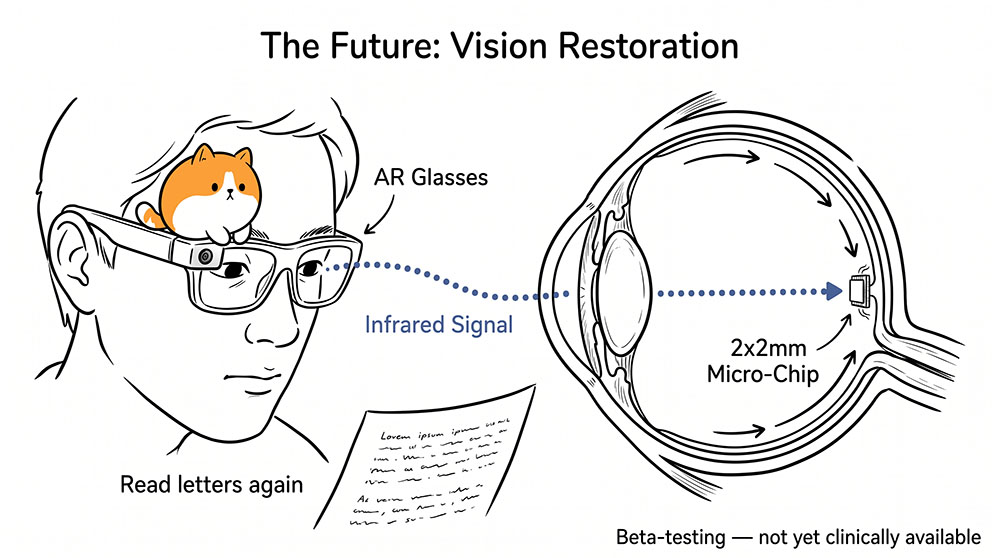
A recent scientific breakthrough combines a micro-retinal implant (a tiny 2×2 mm wireless chip placed beneath the retina) with augmented-reality smart glasses equipped with a camera. The glasses capture the visual environment and send images to the implant using invisible infrared light, which stimulates healthy retinal cells to transmit visual information to the brain. In early clinical trials:
-
Over 80% of patients could read letters or short words using the treated eye
-
Many gained the ability to read several additional lines on the eye chart
-
Some reported recognizing faces and objects for the first time in years
This technology is still in research and beta-testing phases and not yet available for clinical use, but it represents a significant step forward in vision restoration.
Intraocular Metalens telescopes
Metalens technology represents a revolutionary advancement in optics, using nanostructures to manipulate light with unprecedented precision. These ultrathin, lightweight planar lenses can eliminate spherical aberrations and offer potential applications in ophthalmic devices. Developments in metalens fabrication, including nanoimprint lithography and materials like TiO2 and graphene, are paving the way for high-performance, wafer-scale production of flat optics for imaging and medical devices.
Contact Lens Ultrasound Retinal Stimulation
Another promising innovation involves a wireless retinal stimulation system using ultrasound technology. The system consists of a thin, flexible implant paired with a wearable contact lens-style ultrasound transmitter. Unlike existing retinal prostheses that require complex surgery with implanted electronics, this technology offers:
-
Noninvasive stimulation: No implanted wires, coils, or electronics
-
Sub-20 micrometer effective resolution: For precise stimulation
-
Dual-mode mechanical and electrical stimulation: With no optical safety constraints
-
Simplified surgical procedures: Easier integration with standard vitreoretinal workflows
This technology could expand access to effective vision restoration for a larger patient population while lowering long-term healthcare costs.
Conclusion: Hope and Practical Solutions Today
While low vision presents significant challenges, there are practical tools and strategies available today to help you maintain independence and quality of life. From training methods like eccentric viewing to simple environmental adjustments and powerful optical aids, you can maximize your remaining vision. And with emerging technologies on the horizon—from retinal implants to ultrasonic stimulation—the future holds even greater promise for restoring functional sight.
If you are experiencing changes in your vision, make an appointment with an eye doctor. If you notice sudden loss of vision or experience pain, seek immediate evaluation. For those already diagnosed with low vision, consult a low vision specialist for a comprehensive assessment and personalized recommendations. Organizations like Blind Low Vision NZ and the American Federation for the Blind provide information, services, and support.
Remember: Low vision is not the end of an independent life—it's the beginning of learning to see the world in new ways.
Related News